Our product picks are editor-tested, expert-approved. We may earn a commission through links on our site. Why Trust Us?

Looking to Improve at Pickleball? It’s Time to Buy Your Own Paddle.
Brands like Selkirk and Onix came out on top.
 Reviewed by Ryan BrowerSenior Gear and Reviews Editor
PICKLEBALL IS A great way to stay active, whether you’re looking to crush cardio day, are playing some games for active recovery, or are an avid pickler crushing the competition, the sport itself is still one of the largest and fastest growing sports in the U.S.—and for good reason—as it has everyone from celebrities, artists, and entertainers to gym-goers (yes, we have a pickleball workout plan) and grandparents hitting the courts. Once you play pickleball, you will quickly realize how important it is to have a paddle that suits your style of play—as well as pickleball shoes for proper agility and playing with the right kinds of pickleball balls.
Best Pickleball Paddles
- Best Overall: Selkirk Sport Luxx Control
- Best Budget: Head Radical Elite
- Best Upgrade: Selkirk Sport Vanguard Power Air
- Best for Beginners: Onix Graphite Z5
- Best for Competitive Play: Joola Ben Johns Perseus 3S
- Most Stylish: Tangerine Gardiner's Bay Paddle
Pickleball paddles have gone through rapid innovation in the past several years due to the sport's rising popularity. We spoke with Ben Johns, a professional pickleball player in the PPA (Professional Pickleball Association-former World #1 and currently second ranked player), to get his take on what to look for in a paddle. "The key features you want to look for are weight, dimension, and material," Johns tells Men's Health. Once you know this is a sport for you, here is what he mentions when making that investment buy. "The right time to buy a paddle is usually when you find yourself wanting to improve your skills as a player, as opposed to just playing for fun every now and then."
With the help from Johns (as well as other experts) and and ton of our own testing, we'll outline what to look for when buying a pickleball paddle and detail why these are the best ones we've found.
 Best Deal

Selkirk LUXX Control Pickleball Paddle


Pros
- Absolute shot precision
- Generous sweet spot
- Great ball control
- Good spin on shots
- Balanced weight and feel
- Cuts through the air with less drag

Cons
- Less than ideal pop
- Less forgiving on aggressive shots
- Power is generated from the player, not paddle

When it comes to pickleball, Selkirk leads the way with its fantastic lineup of paddles, and its LUXX Control paddle just may be its most polished yet. At the end of the day, controlling your shot and placing the ball exactly where you want it to go reigns king, and this paddle does that best.
This midweight paddle strikes a balance between high-tech specs and craftsmanship, featuring a slightly longer frame (16.45 inches) and a lengthy handle (5.35 inches), which allows for greater reach and more room to perform a two-handed backhand. The Florek carbon fiber face and thick 20mm honeycomb core provide the accuracy you need without compromising your ability to generate powerful shots.
Having the pleasure of playing with this paddle, I just love the way that it seamlessly cuts through the air. Unlike other cheaper paddles that can create drag, this one does not. It almost feels like my reflexes are quicker when I play with it.
This paddle just does it all, from its modern looks to its accurate shot placements to the power and speed it can create—there's nothing this paddle can't do. With a presence for controlled hits, each shot feels intentional, while still maximizing power. While it may lack the elite pop of others, its overall performance outshines that drawback. With its current reduced price, it's hard to beat, making it our pick for the best overall pickleball paddle.
Read More: Best Pickleball Shoes

Features at a Glance
| Weight | 7.8 oz |
| Paddle Length | 16.45 in. |
| Grip Circumference | 4.25 in. |
| Face Material | Florek carbon fiber |
| Core | Thikset honeycomb |
Onix Graphite Z5

Pros
- Under $100
- USA Pickleball Approved
- Improved grip adds for better control
- Large sweet spot that delivers solid power
Cons
- Compact design takes a second to get used to
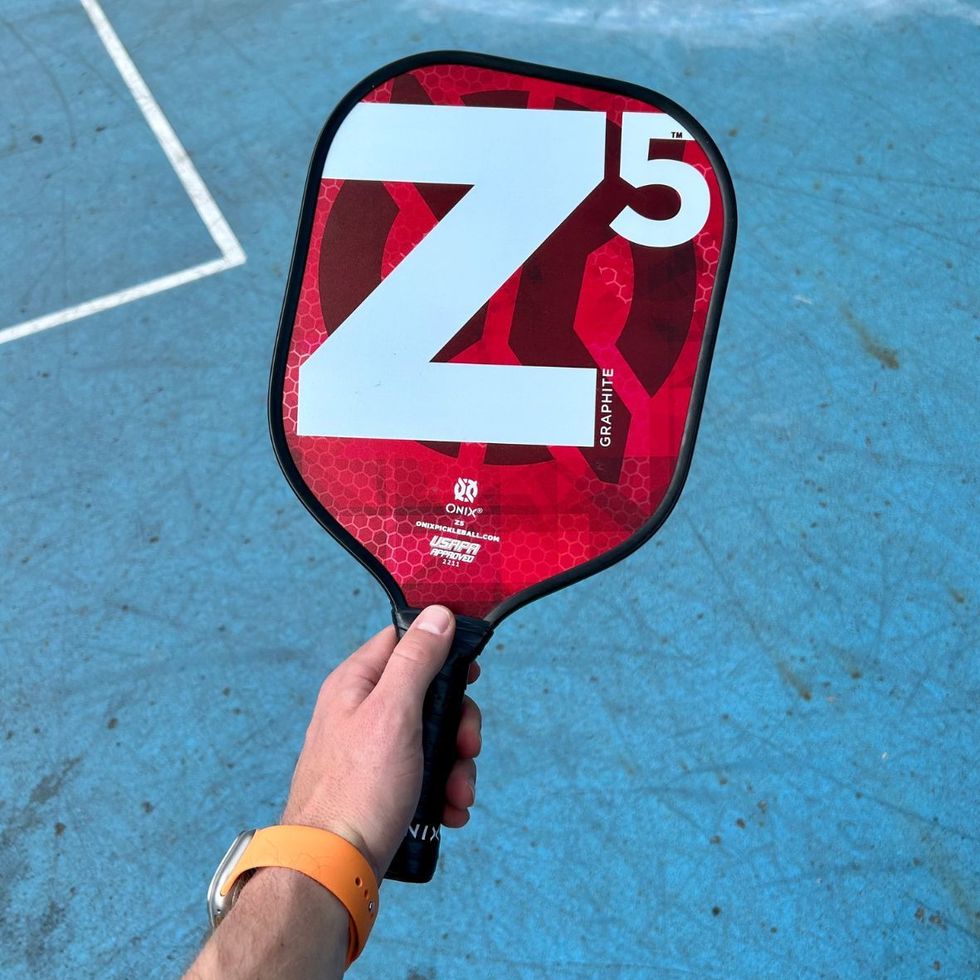
If you watch any professional pickleball events on TV, it's likely you'll notice Onix as a paddle in a few pro's hands. Onix has a wide array of paddles to choose from, but the Graphite Z5 is a trusted pick that's big on ball control and clean returns. The takeaway from the Z5 is that you get the best qualities of a graphite paddle for a price point of just under $100, which is an excellent value. Graphite is a favorite for many pros due to the material's strong design and lightweight feel, making it easy to control each shot and finesse where you want your ball to go.
It plays with a well-balanced feeling in the hand. The Nomex honeycomb core seems to limit dead spots, and the paddle offers enough space to connect cleanly on most shots. (The shape of the paddle gives you a sneaky amount of surface area, too.) In terms of quality, the paddle has a lofty weight and powerful sweet spot, giving it a superior rating. The paddle was especially great on serves, allowing you to whip the ball over the net and get some good spin. The Z5 caters to all skill levels, but it's especially great as a beginner pickleball paddle—you won't have to upgrade from it for quite a while.
Read More: Best Pickleball Accessories
| Weight | 8.2 oz |
| Paddle Length | 15.5 in. |
| Grip Circumference | 4.25 in. |
| Face Material | Graphite |
| Core | Nomex honeycomb |
Head Radical Elite Pickleball Paddle
Pros
- Comfortable ergonomic handle
- Trusted level of control and power
- Excellent value for the price point
- Longer handle that mimics a tennis racket feel
- Long lifespan
Cons
- Will want to upgrade if you start playing more competitively
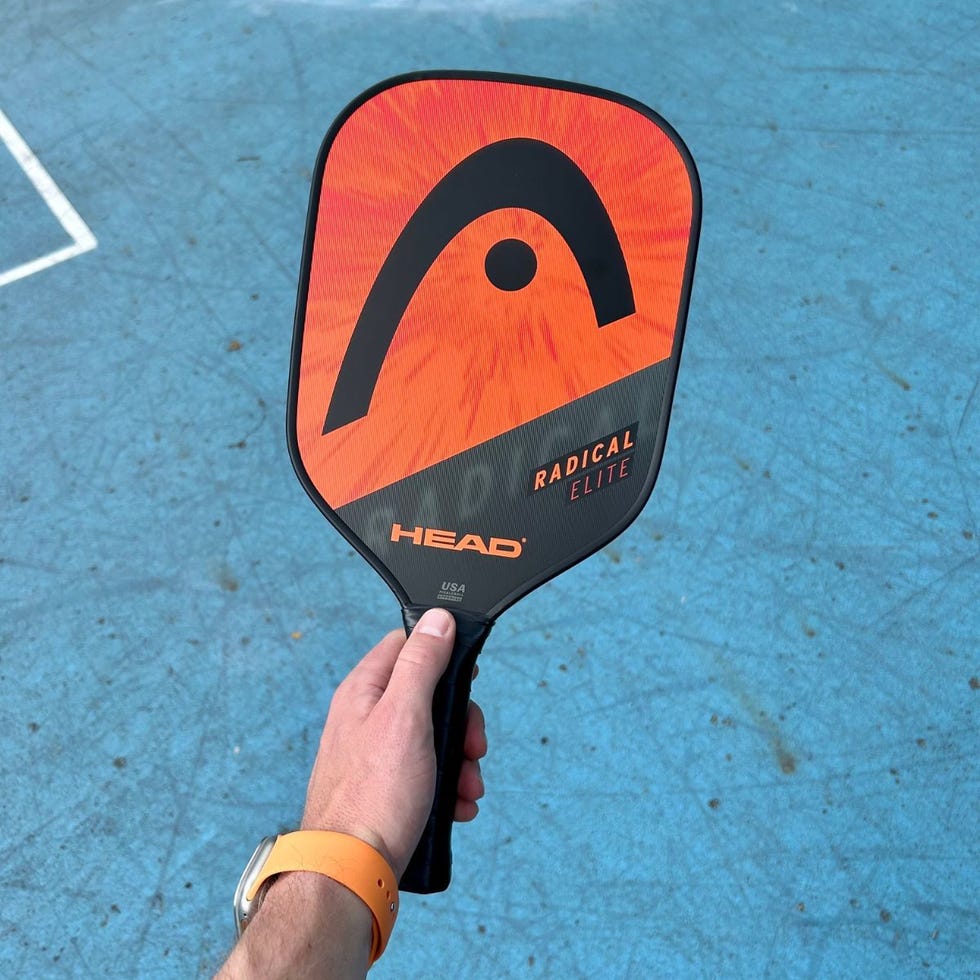
Head's Radical Elite paddle is the ultimate wallet-friendly pick for those who are getting pickleball fever. As far as design goes, the Radical Elite comes with a honeycomb core, a fiberglass finish, and a wide surface area to smack the ball. You also get a comfortable foam handle with a length similar to that of a tennis racket.
While the Radical Elite lacked power a bit, this paddle prioritizes control while staying lightweight, so it's a great option for learning the game. You can play competitively with the Radical Elite too, but as you see yourself progressing you may want to switch to a paddle with more power. But remember, this paddle retails for around $50, when in reality it plays closer to a $100 paddle. It's such a good price that it makes for an easy pickleball gift you can give to players of all skill levels (experts can use it as a backup paddle).
| Weight | 8.1 oz |
| Paddle Length | 16 in. |
| Grip Circumference | 4.125 in. |
| Face Material | Fiberglass |
| Core | Polypropylene honeycomb |
JOOLA Ben Johns Perseus 3S

Pros
- Pro level ready
- USAP approved
- Exceptional power
- Great spin
Cons
- Investment price
- Not ideal for beginners
Made in collaboration with Ben Johns, who has dominated the PPA tour for years, having won an impressive 123 title wins. This paddle is made with enhanced stability, giving you a precise shot from its charged carbon surface. Basically, it’s been bond-treated for improved strength, which gives you a crisp feel during contact for improved energy return on the ball. In a nutshell, this gives you a “poppier” response.
What helps make this one pro-level paddle is the insane propulsion core. It’s designed with a patent-pending core that gives you explosive power unlike any other, on all shots, from line drives, drops, and dinks to counters. Combine that with an elongated paddle face, and you will have ample hitting surface area to make you a spin master with an enormous "sweet spot," meaning fewer miss hits, too. One of the best features is that this paddle is NFC chip-enabled. In a world where data is king, this allows you to access training vids based on your style of play, a community experience, and gamification, all through the JOOLA Connect app. This thing truly is next level.
| Weight | 8 oz |
| Paddle Length | 16.5 in. |
| Grip Circumference | 4.25 in. |
| Face Material | Charged carbon |
| Core | Proprietary |
Selkirk SLK ERA Power Pickleball Paddle


Pros
- Aggressive pop jumps off paddle
- Decent forgiveness
- Exceptional spin
- Powerful shots
Cons
- Expensive cost
- Less forgiving
- Learning curve
Once you've played the game long enough and can consider yourself an advanced player, you need a paddle that demands more than just control. You need a paddle that can deliver heavy line drives, insane spin, and provide all the pop and power you can imagine. That is exactly what you get in the SLK Era Power paddle.
Its fusion core is a blend of polypropylene honeycomb surrounded by EVA foam, increasing its overall stability and taking its forgiveness to another level—something you don't find too often in a power paddle. I love that even when I miss the sweet spot on a hit, it still feels stable in my hand, which means I can worry less about having to make perfect contact each time. A rare thing for elongated paddles.
Its elongated shape, measuring 16.5 inches with a 5.8-inch handle, provides great reach on every shot and ample space for double-backhands. Combined with its three-layer face of fiberglass and T700 raw carbon fiber, shots on this paddle seem to jump off its surface (according to Selkirk's website, this paddle can generate speeds up to 2,000 RPMs). This paddle is excellent for aggressive players.
While its price may be a bit of an investment, and there is a bit of a learning curve with elongated paddles like this, its overall performance easily outweighs those setbacks, especially for advanced players. If you're seeking a pro-level paddle that swings well, puts ample pop on each shot, and looks good doing it, the SLK Era Power is for you.
Features at a Glance
| Weight | 7.9 oz |
| Paddle Length | 16.5 in. |
| Grip Circumference | 4.25 in. |
| Face Material | Woven fiberglass and T700 Raw Carbon Fiber |
| Core | Polypropylene surrounded by EVA Foam |
Tangerine Gardiner's Bay Pickleball Paddle


Pros
- 13 unique designs
- Affordable
- USAP approved
- Cognac leather grip
- Great paddle for all levels
Cons
- Not ideal for competitive play
- Durability is not ideal
If you’re looking for a paddle to make a statement on the courts and one that can easily fit in at a country club, Tangerine’s Gardiner's Bay is that paddle. The Gardiner's Bay aesthetic is one inspired by the luscious greenery you'll find along Long Island Sound and Gardiner's Bay, NY. However, this pick is more than just a pretty paddle, as it performs quite well, too.
With a generous sweet spot and elongated face, this paddle is a great choice for players of all levels. It has one the lightest weight of our featured paddles, with a featherweight of only 7.6 ounces, allowing you to whip around on your strokes for max power. The fiberglass surface gives it a nice responsive pop while the paddle's thickness perfectly balances accuracy and power. The blue and white stripes perfectly match the chestnut brown leather grip. It is also USA-P approved as well. This fun paddle adds a pop of color and a pop on your shots.
Features at a Glance
| Weight | 7.6 oz |
| Paddle Length | 15.65 in. |
| Grip Circumference | 4 in. |
| Face Material | Fiberglass |
| Core | Polypropylene with honeycomb |
Selkirk Vanguard Power Air Pickleball Paddle

Pros
- Air hole for faster swing speed
- Incredible blend of power and control
- Rounded edges
- Used by professional pickleball players
- Sharp and sleek design
Cons
- Very expensive
- Meant for competitive play.
A $270 pickleball paddle is no easy investment, but those who want premium gear will find interest in the Selkirk Power Air Epic. One of the elite models on the PPA tour, this is one "epic" paddle. For starters, the Power Air has an elongated handle and stand shape that creates a generous surface area, while the handle makes it perfect for double-handed backhands. Second, the Power Air’s performance is some of the most advanced—it’s truly a power player's dream. Selkirk added the air opening to create faster swing speeds, as it feels like serves have some extra whip to them.
A third key finding from playing with the Power Air Epic was the overall feel of the paddle. It's like holding the paddle equivalent of a Ferrari: fast, lightweight, sexy. The handle is luxe and cushioned, and the extra wrapping near the end of the handle helps you get a more secure grip. There are no pronounced edges on the Power Air for the ball to take a weird shot off of, so there's actually a chance you get a clean return even if you connect near the edges of the paddle.
The Power Air Epic is meant for serious players only (and the price tag reflects that), and the sleek design shows that you're using the best technology in the game.
| Weight | 7.7 oz |
| Paddle Length | 15.75 in. |
| Grip Circumference | 4.25 in. |
| Face Material | Hybrid blend of fiberglass and carbon fiber |
| Core | Polymer honeycomb |
Six Zero Quartz Pickleball Paddle

Pros
- Phenomenal spin
- Slick design
- Lightweight
- Affordable considering its performance
- Unibody construction
Cons
- Durability is lacking
- Suited for advanced players
For those looking to put their shots on "spin cycle," the Quartz paddle from Six Zero is for you. The face of the paddle is crafted from raw textured T300 carbon which gives it the perfect hitting surface for maximum traction on the ball. Translation: more RPMs and way more spin. Then, you also have the lightweight design, allowing for way faster swings and quick hands, which again can translate to more revolutions on the ball. Not only does it give your top tier spin, but it has a great flexibility to give you good control over you shot placements, too.
It has a solidly large sweet spot for shot forgiveness, and thanks to its one-piece unibody construction, it was also designed with durability in mind. For a paddle that is performance-driven and for a price under $100, this is one of the best paddles on our list. They also have multiple pops of color that wrap around the head of the paddle and really stand out on the blacked-out face, so there’s a choice for everyone, too.
| Weight | 7.9 oz |
| Paddle Length | 16 in. |
| Grip Circumference | 4.25 in. |
| Face Material | T300 raw carbon |
| Core | Polypropylene honeycomb |
Paddletek Honeyfoam TKO-X

Pros
- Excellent pop and power on shots
- Has a soft feel for touch shots
- Large sweet spot
- Fairly balanced feel through swing
- Great spin
Cons
- $250 is a steep cost
- Not best for beginners
- Takes a while to get used to
- A bit weighty
The one paddle that I have been [patiently] waiting to get my hands on is this highly anticipated Honeyfoam TKO-X model, which builds upon the brand’s super successful Reserve special edition model. At the heart of its build is the proprietary three foam design that gives it even more energy return delivering excellent power on every shot. The ball jumps off the surface, so much so that it took a couple of points for me to adjust (but in a good way.) Once I got it figured out, my opponent was left scrambling to return my aggressive forehands. Its advanced edge guard also dampens shock quite well, no matter how much power I put into it.
But, it’s not all power no touch either, as I could easily control shots in the kitchen as well, making it a surprisingly well-rounded paddle. This is partially thanks to its elongated design, which makes those hard to reach shots just that much easier. While it is one of the most expensive options in our guide, its soft touch and great power make this my new favorite competitive paddle.
| Weight | 8.2 oz |
| Paddle Length | 16 in. |
| Grip Circumference | 4.25 in. |
| Face Material | PT-700 Unidirectional Raw Carbon Fiber |
| Core | EPP + EVA honeyfoam |
Bread & Butter The Filth Pickleball Paddle

Pros
- Pro-level power paddle
- Thermoformed construction
- T700 carbon fiber face
- Minimal shot vibrations
Cons
- Expensive
- Not ideal for beginners
- Not a great choice for control hitters
This paddle is filthy good, and if you consider yourself a power player or dream to be one, this is the paddle you want in your pickleball bag. It’s crafted using the same thermoforming techniques you’ll find in the paddles on the tour—using similar materials like T700 Carbon fiber—giving you premium power in the palm of your hand for half the cost of the tour models. This process results in a sturdy yet very lightweight paddle for great control and even more power on your shots. Basically, the carbon fiber face and a single-piece design allow you to generate more torque while amplifying its sweet spot and reducing vibrations on shots.
The rest of the paddle is pretty solid, too, as it has a slightly longer handle for easy double-handed control, good aesthetics, and it's a fairly light paddle. There is not much to dislike about its performance, and though it is a bit of an investment and better suited for more advanced players, it can definitely elevate a beginner’s performance right out of the gates.
| Weight | 7.6 oz |
| Paddle Length | 16.5 in. |
| Grip Circumference | 4.25 in. |
| Face Material | T700 raw carbon fiber |
| Core | High-density polypropylene honeycomb |
Selkirk Labs Project Boomstik Widebody

Pros
- Massive sweet spot
- Long handle means greater control
- Excellent for defensive players
- Very durable
Cons
- It's almost $350
- Slower swing speeds
- Generally sells out fast
- Lacks premium power
If you want a nice and wide paddle for maximal surface area, the Project Boomstik in the widebody model is the way to go. So, why would you want a wider paddle if it means a slower swing speed? Well for starters, widebodies are great for forgiveness and minimizing mishits. The Project Boomstik gives you a generous sweet spot and is a perfect choice for those who love to work the net in the kitchen (where the game is truly won and lost).
With this Selkirk model, you get a nice and long handle too, which makes it an even greater choice for defensive players who prioritize paddle and ball control. And even though most would consider this a defensive players choice, it’s loaded with Selkirk’s BoomCore tech to help give it plenty of pop on all your power shots. Plus, it makes for one heck of a durable paddle.
While it is arguably one of the most expensive off-the-rack models you can buy, if you wanna dominate the competition, even as a rookie, this one will get the job done.
| Weight | 8.2 oz |
| Paddle Length | 15.95 in |
| Grip Circumference | 4.25 in. |
| Face Material | Multistrata T700 Carbon |
| Core | BoomCore (PureFoam with EVA) |
What to Consider
Weight
The average weight for a paddle is going to be around 8 ounces and fluctuate above and below that number. Anything at 9 ounces is usually too heavy and anything under 7 ounces is usually too light. "For weight, somewhere in between 7.5 to 8.3 ounces is a good range," says Johns.
Dimensions
The basic configuration most new players will want to use is called a "wide body paddle" according to Carl Schmits, Managing Director of Equipment Standards & Facilities Development for the USA Pickleball Association. "This configuration is easiest to maneuver and is also good for a controlled, more defensive style of play. Paddles that are close to 8 inches wide by 16 inches long are within the wide body category." says Schmits. "Players that have well-developed stroke mechanics from other sports may be most comfortable with paddles having a longer shape (between 16" and a maximum of 17") and some with a longer handle will better facilitate two-handed backhands, which is an increasingly common grip used very successfully by tennis converts."
Materials
Carbon fiber and fiberglass composites are the two most common materials used in high-quality paddles, as they been shown to help players deliver speed and spin on the ball. A good pickleball paddle should also have zero dead spots, meaning when you make a quality hit on the ball it doesn't randomly underperform and fall flat. "When it comes to the material, I like to look for a polypropylene core with a fiberglass or carbon fiber face," says Johns.
Power vs. Control
Similar to how you might shop for a driver in golf, your pickleball paddle is going to have a formula of power and control that works for you. A power paddle will have a tight sweet spot and deliver a shot with more pop, while a control paddle has a larger sweet spot that's softer but allows for more consistent returns.
Power Paddles
For a power paddle, look for something tighter and more compact in all areas of the design."Paddles that have thinner cores, like a 13mm-14mm, have longer configuration, and typically made with fiberglass faces will return more power, although hitting the ball with heat is as much a result of an efficient kinetic chain than anything," says Schmits.
Control Paddles
If you want a paddle with more control, a design with maneuverable dimensions and a carbon fiber face (as opposed to a fiberglass face, which is harder) is recommended. "I'd look for at least 8 inches of width on the paddle head and for a thicker core that's 16 millimeters or more, or 5/8 inches or more," says Johns.
Grip Circumference
Our experts explained to us grip circumference carries just as much importance in a pickleball paddle as it does in a tennis racket. They also noted there are fewer options when it comes to shopping for specific grip sizes pickleball (most brands use a standard 4.25" size). Most pickleball paddle grips will vary from just under 4" and no bigger than 5.5.
John Crowley Sr., the Sr. Category Merchandising Manager of Paddles at Pickleball Central, recommends starting with a smaller grip first (when picking between two paddles) and then adding an overgrip if needed. "Very few manufacturers offer different grip sizes and materials, so customizing with an overgrip wrap is the best way to build up the grip to a comfortable size," added Schmits.
Core Design
A reliable pickleball paddle is usually thick, as brands fill the interior space with their own technology to limit the odds of any dead spots. One popular interior makeup is a polypropylene core (also called honeycomb core design) which is a type of interior webbing that's made into a honeycomb shape to ensure the paddle is evenly balanced.
How We Selected
I have been fortunate enough to play with numerous paddles over the past couple of years, from multi-hundred dollar paddles to those under $50, and I can tell you that it’s not always about the cost that makes a paddle worth playing with. Through my time playing regularly and testing gear along the way, I've combined that experience along with paddle recommendations from the Men's Health editors and writers who also play consistently. For this guide we considered everything when we compiled our list of recommendations, including weight, dimension, material, grip circumference, core design, aesthetics, feel, and price. Once I gathered all our notes, I compared paddles based on performance and durability. We also considered what paddles appeal best to specific skill levels, from beginners to 4.0-rated players.
After testing tons of different pickleball paddles and consulting with experts, we eventually landed on 11 pickleball paddles we recommend in 2026.
Meet the Experts
- Ben Johns is the current No. 2 ranked player in the World and a pickleball player in the Professional Pickleball Association (PPA).
- Laura Gainor is the founder of Vossberg Gainor Pickleball Marketing Agency and former USA Pickleball's Director of Media Relations.
- Carl Schmits is the Managing Director of Equipment Standards & Facilities Development for the USA Pickleball Association.
- John Crowley Sr. is the Sr. Category Merchandising Manager of Paddles at Pickleball Central.
- David Dutrieuille is a 5.0-rated traveling player and coach and the National Pickleball Director for Life Time.
- Bahram Akradi is the Founder, Chairman, and CEO of Life Time Fitness.
Frequently Asked Questions
Is There Really a Difference Between Pickleball Paddles?
Just like shopping for running shoes, you can find pickleball paddles at all types of prices. Generally speaking, expect to pay anywhere from $60-$100 for a beginner to intermediate level paddle. If you're looking for an advanced paddle, any model we recommend above $100 is a worthy choice.
If you're going to play more than two times a month, Johns says it's time to invest in a paddle: "The right time to upgrade your paddle is usually when you find yourself wanting to improve your skills as a player as opposed to just playing for fun every now and then."
Crowley Sr. also gave us tips on how to go about investing in a paddle. "When you go shopping have a budget in mind (the best value to price is no object). How much do you plan to play? What is your sports background and if you know, what style of player are you—power player, control player or all court?" he says.
If you think you have to splurge on a competition-ready paddle, think again. "I say shoot for the $75 to $100 range for your first paddle if you want to play competitively," says Laura Gainor, USA Pickleball's Director of Media Relations. "And if you’re planning to sign up for your first tournament, make sure your paddle is USA Pickleball approved." We agree there's nothing worse than bringing your paddle to a match and discovering you need to find a different one that complies with the rules.
Is Fiberglass or Graphite Better for Pickleball Paddles?
Fiberglass and graphite paddles have characteristics about them that can play to your natural strengths on the court. "You are trying to find the recipe that works best for you," says Crowley Sr.
In general, fiberglass pickleball paddles have more power but less control than a graphite paddle. This is mainly due to the fact fiberglass weighs more. Graphite, on the other hand, is lighter and stronger due to the thinly layered construction of the material. Graphite paddles are often associated with better control, resulting in a better ability to place each return where you want it.
Fiberglass paddles are more wallet-friendly, and have been gaining in popularity due to their quality performance while staying at a good price point. Graphite paddles are more expensive and are often seen being used more by pros in tournaments.
One other paddle material to consider is composite. For example, you might find a composite design that incorporates carbon fiber and fiberglass in hopes to bring equal parts control and power. Composite paddles are usually high quality and exist at graphite-level prices (or higher), but it's important to make sure the paddle is USA Pickleball approved if you ever want to play competitively.
Which Pickleball Paddle Has the Largest Sweet Spot?
While all of the paddles above were curated with attention to sweet spot, there are a few characteristics you can prioritize when shopping.
The first is to go by surface area. You will probably get the most sizable sweet spot area by going off the most common dimension of a 16" length and 8" width paddle. Second is inner material of the paddle: look for a trusted core material, like a honeycomb propylene core design, that can cover all areas of the paddle and help reduce the chance of being any dead spots.
Last is the type of material used to construct the paddle. There are a lot of fiberglass paddles out there with generous sweet spots, but if you want to get the largest sweet spot possible then going to a more expensive graphite paddle is probably the best move.
When Should You Replace a Pickleball Paddle?
There are two situations where you want to consider replacing your paddle. The first is if you find yourself playing more (and perhaps more competitively) than when you first started. A good rule of thumb is if you're playing more than two times a month, it's probably time to consider investing in a competitive play paddle.
The second situation that would warrant replacing your paddle is if it's damaged or worn down from constant play. If you stick to the paddles we recommend above, you can expect the lifespan to last between 1-3 years. But sometimes your paddle can wear out faster (also called a "dead paddle") if you're playing much more. In order to tell if you need to replace your paddle due to overuse, pay attention to the feel and how the ball comes off the paddle. Is it returning or serving shots the same way it was in the first few months of use? If not, your paddle is probably wearing down.
You can also pay attention to the sound of the ball off the paddle. Are your best shots delivering a nice and clear pop? Or are they sounding flat and droopy? If you're out playing consistently, then you will probably know when your paddle is ready for retirement.
How to Take Care of a Pickleball Paddle
Pickleball paddles are resilient. They can take a beating on the court, but off the court you should keep them away from the sun and heat for extended periods of time.
If you're concerned about keeping your paddle pristine-looking, invest in a paddle cleanse kit to clean the face, and pack it in a paddle cover to prevent scuffs. "I wipe down my paddle face once a week with water to prevent any accumulation of dirt," says Schmits.
"Keep your paddle stored in a cool, dry environment and never leave it in a hot car. Also, don't smash it when you're angry," says Johns.
How Can the Right Pickleball Paddle Help Prevent Injury?
Like any sport, pickleball does pose some injury risks (some games to last over 2 hours at a time). The most common injuries include tennis and golf elbow, which can be caused by swinging a paddle that's too light or too heavy—or simply by swinging it too much and not allowing for proper rest.
"Grip size, paddle weight, and swing weight(how the weight is distributed) all contribute to the efficiency and comfort of the human-paddle interface," says Schmidts. "A grip that is too small may require an over-clenched grip to prevent spinning in the hand, a paddle that is too light may not have enough mass to prevent twisting on off-center shots and will transmit unwanted vibration, an overly head-heavy paddle may require more torque to snap through. Also, a paddle that is too heavy will quickly fatigue muscles, as well as slow down hand speed."
A paddle with good vibration absorption is also important, which is why a wooden paddle is a no-go if you're an active player. "Anything that absorbs more energy in the paddle and reduces the amount of vibration that travels up your arm is good at preventing soreness," says Crowley Sr.
Shop All the Men's Health Training Guides

Men's Health Muscle After 40 At Home

Men's Health 28-Day Belly Fat Burner Workout

Men's Health Weight Loss After 40

Men's Health No Gym Required: Kettlebells

Men's Health 6-Week Lean Muscle Level-up

Men's Health 90-Day Transformation Challenge: Abs

Men's Health Unstoppable After 40

Men's Health The Lose Your Gut Guide
Jeff Turbett is a fitness and wellness writer who's based in Miami, FL. His work has been featured in The Manual and FightCamp.
John Thompson is the Senior Gear and Commerce Editor at Men’s Health, where he covers fashion, grooming, gear, and technology. He was previously the Style & Gear Editor at BroBible.com, and a commerce writer for TheManual.com. His interests include attending concerts, spending time outside, and following his favorite baseball team, the Kansas City Royals.
Ryan Brower is the Senior Gear and Reviews Editor at Men’s Health, where he tests the best products in outdoor gear and tech. Baseball, surfing, and camping occupied most of his time growing up. He also trained in martial arts for 12 years and holds a third degree black belt. He has written about the outdoors for nearly two decades and was previously the Managing Editor, Content Performance at Gear Patrol. He is also a Certified Beer Server and previously covered the craft beer industry. Ryan currently lives on the water in New Jersey with his wife and their dog.


7 Editor-Approved Padel Rackets to Try Out in 2026

These Are the Final Prime Day Pickleball Deals
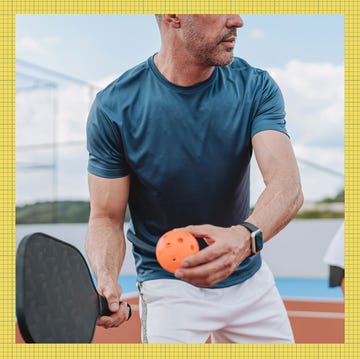
This $58 Tee Is the Best for Pickleball

Pickleball Accessories That Will Enhance Your Game